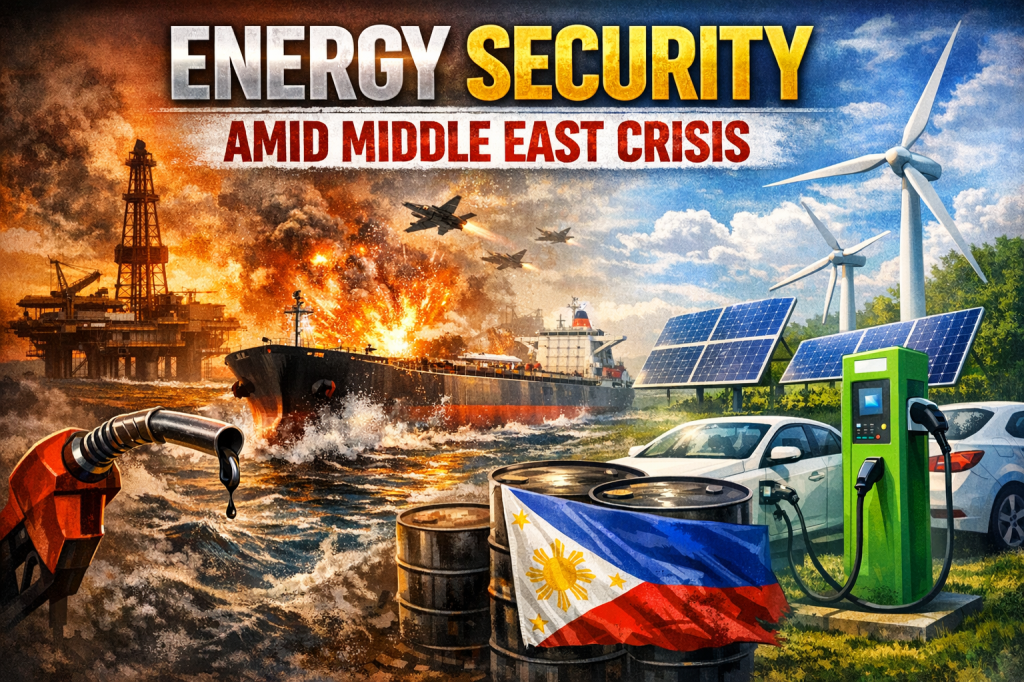
The war in the Middle East is not just a distant conflict—it’s a tremor that shakes the Philippine economy. As Professor Lucio Pitlo III explained in our interview, the Strait of Hormuz, where 20% of the world’s crude oil passes, has become a flashpoint. For a country that imports nearly all its oil from that region, every missile fired there ripples through our gas pumps and household budgets.
The professor’s warning is clear: our dependence on imported fuel makes us vulnerable. The government’s move to diversify suppliers—from Russia’s Vladivostok to Latin America, Africa, and even China—is a necessary stopgap. But sanctions, shipping risks, and insurance hurdles complicate this strategy. Filipino seafarers face uncertainty, and our industries brace for price shocks that could stall growth.
Malampaya, once our pride in energy independence, is running dry. Exploration in Recto Bank, Liguasan Marsh, and Sulu Sea offers hope, but bureaucracy and geopolitics slow progress. Pitlo’s call to accelerate renewable investments—wind, solar, hydro—is not idealism; it’s survival. Modernizing public transport and expanding EV infrastructure could reduce our oil dependence, but only if policy keeps pace with technology.
Critically, the Philippines must learn from history. The oil crises of the 1970s showed how fragile reliance on volatile regions can be. Yet decades later, we remain tethered to the same risky supply chain. Energy security cannot be outsourced—it must be built at home.
Balanced perspective demands we acknowledge the government’s efforts to secure supply while pressing for long-term vision. Diversification is good policy; sustainability is better. The real test lies in whether we can turn this crisis into a catalyst for reform.
In the end, energy security is not just about fuel—it’s about sovereignty.
When our power comes from our own soil, our own sun, and our own seas, we are no longer at the mercy of distant wars.

Leave a comment