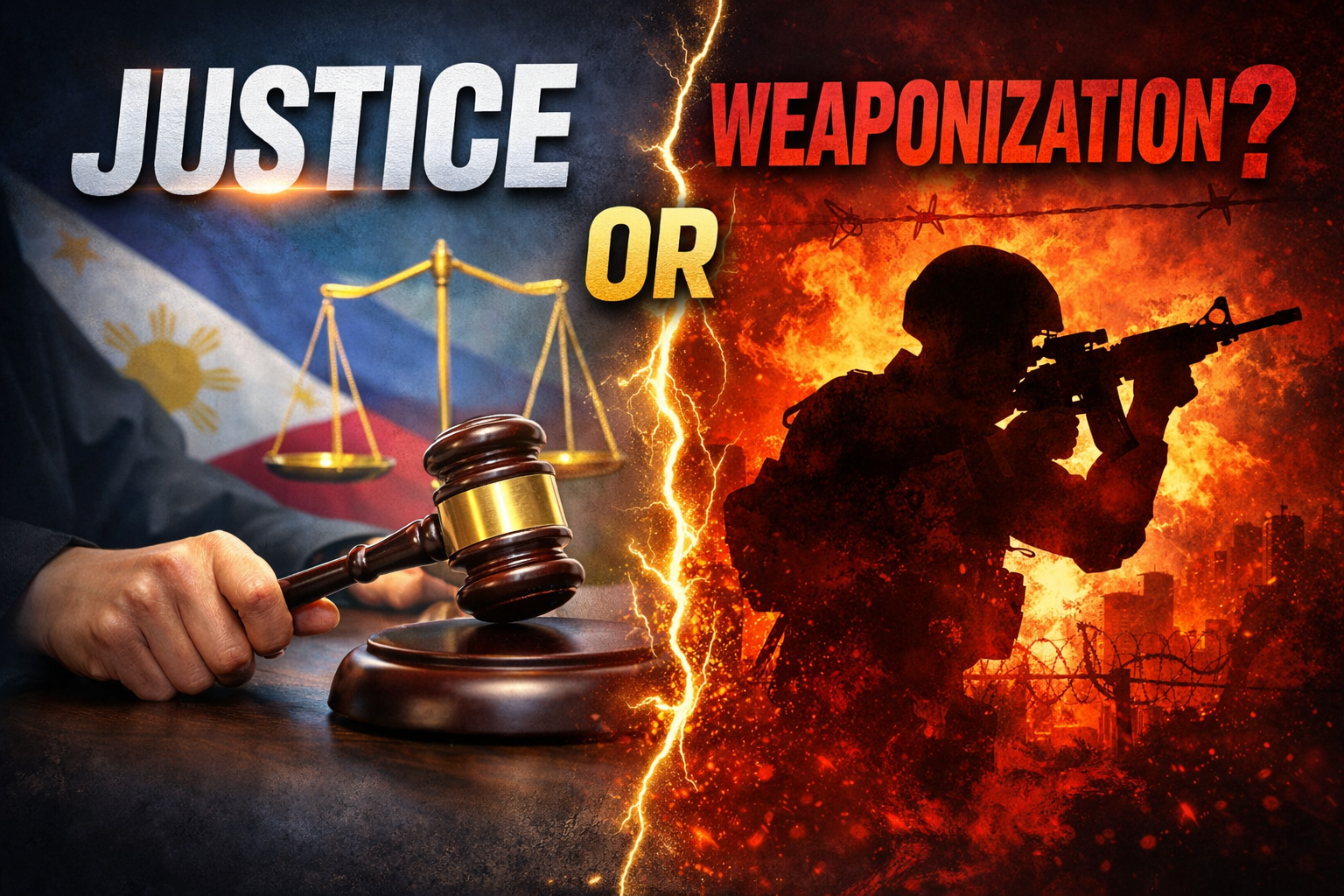
The International Criminal Court (ICC) has once again stirred controversy in Philippine politics with the issuance of warrants against Senator Bato Dela Rosa and former President Rodrigo Duterte. At the center of this debate is the question of sovereignty, justice, and political weaponization.
Dr. Melissa Loja, an international law expert, explains that the Supreme Court refused to issue a Temporary Restraining Order because the “status quo” remains intact—President Marcos himself declared he would not enforce Senator Bato’s arrest. Any move by agencies like the NBI or DILG to pursue a manhunt could therefore violate the subjudice rule.
Yet beyond legal technicalities lies a deeper concern: the selective use of ICC warrants. Dr. Loja warns that while the ICC operates independently, enforcement rests with the Philippine government. This discretion opens the door to weaponization, where warrants become tools to weaken political opponents rather than instruments of justice.
The issue of sovereignty further complicates matters. Although the Philippines withdrew from the Rome Statute, the Supreme Court continues to recognize certain “residual effects”—a position Dr. Loja finds unusual. Under the principle of complementarity, suspects should first face local judicial processes before any surrender to the ICC. Ignoring this safeguard undermines both due process and national sovereignty.
If the Philippines considers rejoining the ICC, reforms are essential. Republic Act 9851 must be amended to establish clear procedures for surrender, ensuring that Filipinos are not automatically handed over while foreign nationals enjoy protections under bilateral treaties.
Ultimately, the challenge is to balance victims’ rights to justice with the need to prevent politicization. Justice must be pursued, but it must also respect both international law and domestic safeguards.
Leave a Reply