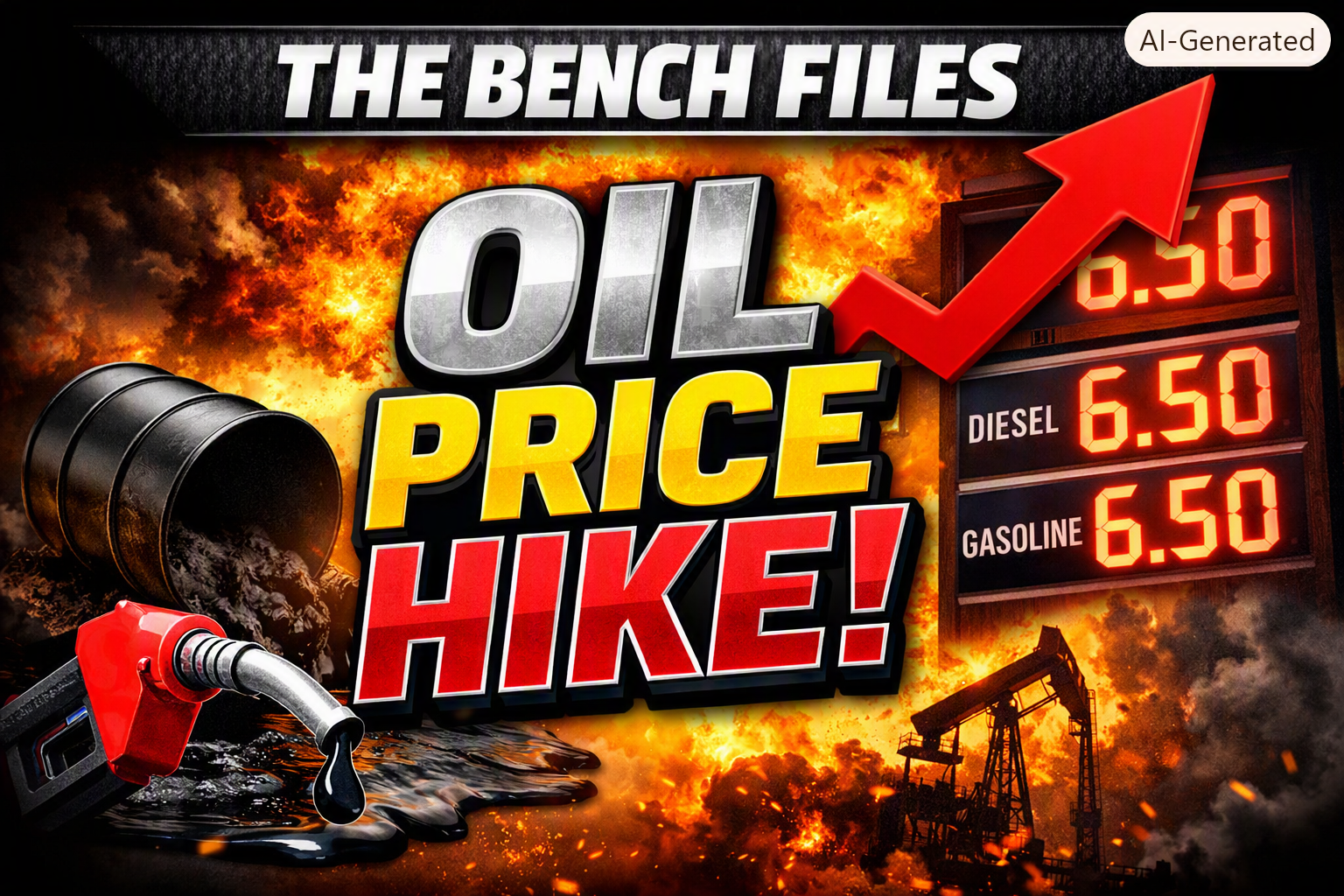
From time to time, the most painful headlines are not about politics but about oil prices. Next week, motorists and ordinary citizens brace for yet another blow: an expected P6.50 per liter increase in diesel and nearly the same for gasoline. The cause is clear—global supply disruptions triggered by unrest in the Strait of Hormuz and Bab el-Mandeb Strait, both vital arteries of the world’s oil trade.
For the Philippines, this is a familiar story. Each time conflict erupts in the Middle East, our economy—so heavily dependent on imported oil—absorbs the shock.
The consequences are immediate: higher fares, more expensive goods, and heavier burdens on families already struggling to make ends meet. We are always hurt by crises beyond our control, yet their impact is felt in every corner of our daily lives.

Economic managers have floated the idea of suspending excise taxes on kerosene and LPG, but diesel and gasoline are excluded. Their reasoning: the effect on retail prices would be “minimal.” But for a jeepney driver who buys diesel every day, or a family that relies on gasoline for livelihood, even a “minimal” increase is a crushing blow.
The Department of Energy has also imposed price caps and rollback rules. Still, the question remains—are these measures enough to soften the impact of relentless hikes?
The crisis has reignited debate over the ‘Oil Deregulation Law’. Under the current system, prices are dictated by market forces and private companies. If consumers continue to shoulder every fluctuation, one must ask: does deregulation truly serve the public, or does it merely expose them to endless pain?
It is undeniable that government actions appear more like temporary bandages than lasting cures. Tax suspensions may ease the pain for a moment, but they do not address the root problem—our overdependence on imported oil and the absence of a clear energy transition plan.
Yet returning to strict state control is not a simple solution either. It risks inefficiency and corruption. The more meaningful path forward is diversification of energy sources: stronger investment in renewables, natural gas, nuclear power and the establishment of strategic reserves. Without these, our economy will remain hostage to every global crisis.
The looming P6.50 per liter hike is not just about fuel pumps. It is a stark reminder of the fragility of our energy security. As long as we rely on deregulation and imported oil, we will continue to be hurt whenever turmoil strikes abroad.
The challenge for government is clear: move beyond short-term relief and craft a long-term strategy for affordable, secure, clean and resilient energy.
Leave a Reply