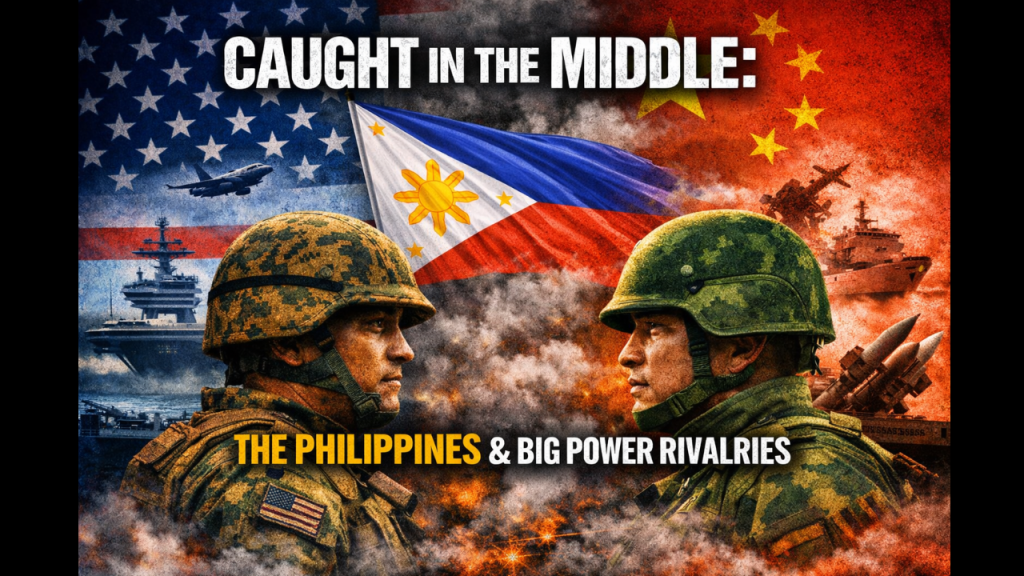
In a recent interview, Prof. Roland Simbulan sounded the alarm on how the Philippines is increasingly entangled in the strategic tug-of-war between the United States and China. His words cut deep: “The U.S. is building up its military forces here, turning Subic into a factory for ammunition and deploying assets across Luzon, Visayas, and Mindanao.”
This expansion, under the Enhanced Defense Cooperation Agreement (EDCA), is not just about bases. It reflects Washington’s attempt to offset its economic decline against China by flexing military muscle. Simbulan warns that Mindanao, with its rugged terrain, may even host refueling depots, offensive missiles, and drone bases—making the Philippines a frontline in America’s “island chain defense” strategy.
The danger, he stresses, is clear. Hosting U.S. bases does not guarantee deterrence; it can make us a target. “Look at the Middle East,” he noted. Countries that hosted U.S. bases became magnets for attacks, dragged into conflicts they never sought. The Philippines risks the same fate if it allows its territory to be used in great power confrontations.
At the same time, Southeast Asia is wary of joining U.S.-led military blocs like AUKUS or the proposed “Asian NATO.” Most ASEAN nations prefer stability and trade with China, seeing conflict as a direct threat to their economies. Only the Philippines, according to surveys, leans more toward the U.S.—a position that isolates us from our neighbors’ pragmatic stance.
Prof. Simbulan reminds us of a path forward: a foreign policy of “friends to all, enemies to none,” echoing President Marcos Jr.’s own words. He urges restoring practical ties with countries like Iran, which once supplied us oil and imported our agricultural products, before U.S. sanctions cut those links. For him, diplomacy and economic pragmatism—not military entanglement—should guide our choices.
The bigger picture is sobering. The U.S. economy thrives on arms exports, fueling what critics call “forever wars.” Ordinary people suffer, while weapons producers profit. If the Philippines continues down this path, we risk becoming collateral in conflicts that serve others’ interests, not ours.
As Prof. Simbulan cautions on Walang Atrasan over DWAR Abante Radyo, the Philippines must resist being a pawn in superpower rivalries. Our strength lies not in hosting bases, but in asserting independence—choosing peace, trade, and practical diplomacy over entanglement in wars that are not ours to fight.

Leave a comment