With the looming threat of El Niño casting a long shadow over our agricultural sector, ordinary Filipinos are asking one critical question: Will we have enough rice to put on our tables in the coming months? Will a shortage hit us?
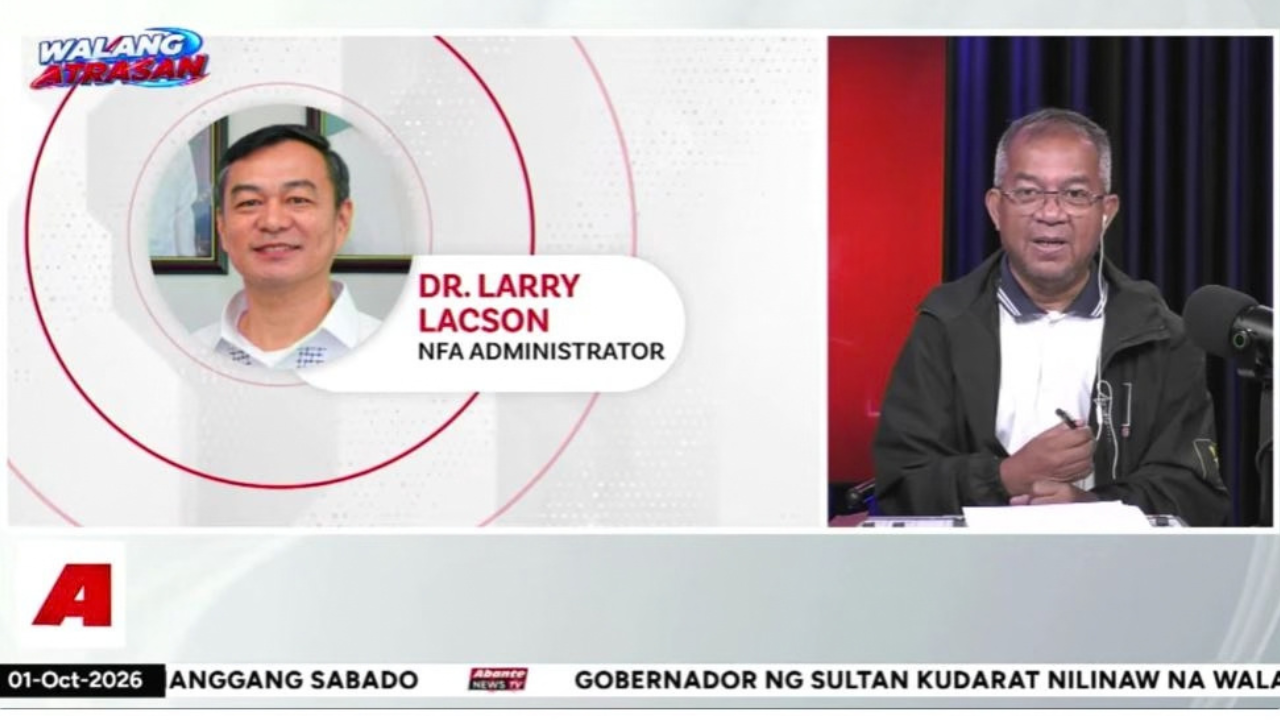
In my recent interview with National Food Authority (NFA) Administrator Larry Lacson on the program “WALANG ATRASAN” on Abante Radyo, we tore into the government’s strategies and readiness. While the promises made sound reassuring, you know how I do it on Walang Atrasan—I look at everything with a critical eye for the sake of the Filipino masses.

First off, the NFA’s target to procure 500,000 metric tons of palay (unhusked rice) this harvest season is highly commendable. This is a massive step toward securing an adequate government buffer stock before the dry spell hits hard. To accommodate this, they have rented additional warehouses and cleared out old stocks to prevent spoilage. Funding isn’t an issue either—on top of their P9 billion regular procurement budget, supplemental funds are on standby if needed. This proves the government has the financial muscle to back our local farmers instead of just heavily relying on imported rice.
But let’s look at the harsh reality on the ground: the severe bottleneck in drying facilities. It was honestly admitted during the interview that government-run facilities can currently handle only 12% of harvest needs. While there is a frantic push to more than double this capacity to 27%, the reality is that the remaining harvest will still fall into the hands of private commercial traders. This is why Admin Lacson’s plea to our farmers makes perfect sense: whenever possible, deliver your palay already dried. This ensures they get better pricing and speeds up the entire process.
For ordinary consumers—especially those living in areas declared under a state of calamity—there is a silver lining. The NFA has guaranteed that Local Government Units (LGUs) will be prioritized to buy rice at a subsidized price of P35 per kilo, a huge relief compared to the PT50 price tag in the private market. But here is our warning to local officials: make absolutely sure this rice reaches the poorest and hardest-hit families. Do not use this emergency food supply for political grandstanding.
When it comes to our overall supply, the message is clear: there is no reason to panic. If you look solely at the NFA’s physical inventory, it only covers about 7 days of national demand. However, when you factor in the entire national buffer—which includes private sector stocks and household reserves—we have roughly 75 days of supply. We have a comfortable cushion against hunger, but this is absolutely no excuse for complacency.
Surviving El Niño is not a battle for the NFA or Department of Agriculture Sec. Francisco T. Laurel alone. This is a collective fight. It requires a government that gives fair prices to farmers, local leaders who distribute aid equitably, and everyday citizens who value every single grain of rice on their plates.
Admin Larry Lacson has laid out a clear roadmap, and we will closely watch its execution in the coming months. The Bench Files and Walang Atrasan, we will relentlessly monitor whether these promises translate into actual rice on the tables of every Filipino family. No backing down from the truth, no backing down from public service!
Leave a Reply