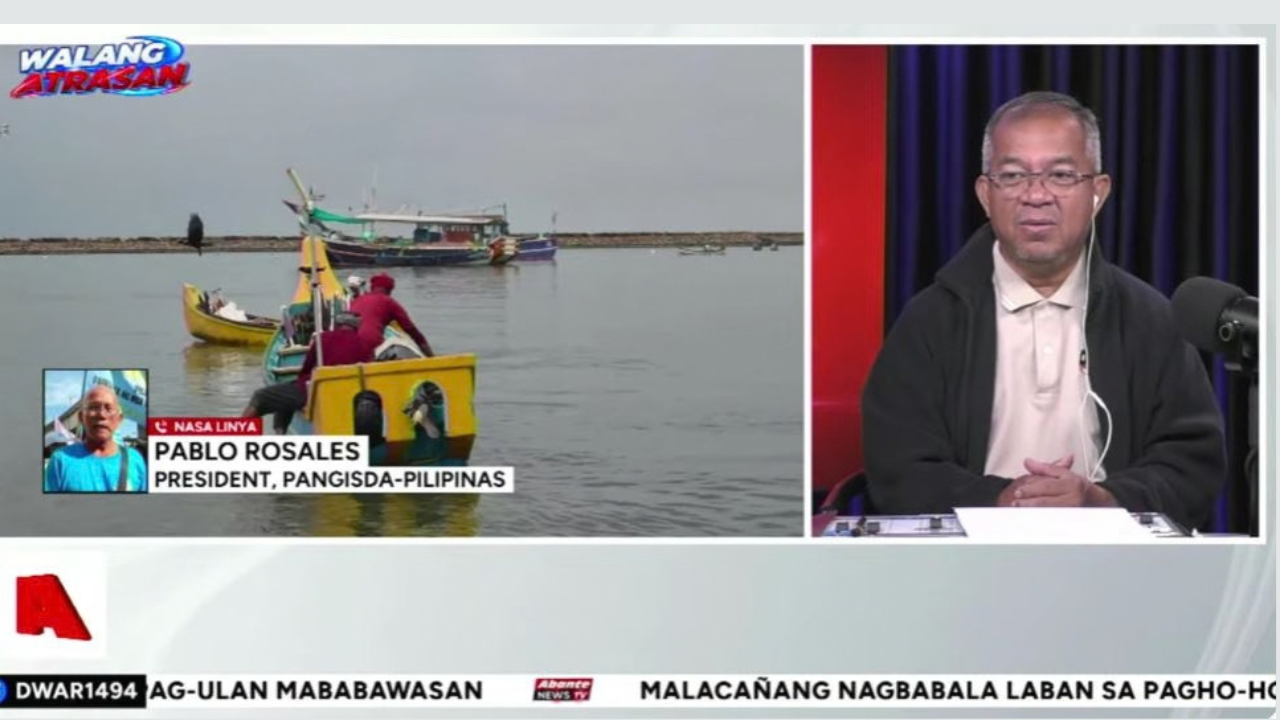
While most of us are consumed by daily complaints about the scorching heat or the relentless rise in market prices, a vital sector of our society is quietly being eroded by a dual crisis: the wrath of a changing climate and the sheer apathy of state bureaucracy. They are our small-scale fishers—the quiet heroes ensuring that protein reaches the tables of every Filipino household—yet they remain the hungriest souls left stranded on our shores.
In a recent interview on the program Walang Atrasan over DWAR Abante Radyo, Pablo Rosales, chairperson of Pangisda Pilipinas, laid bare a reality that is as heavy as it is heartbreaking. The struggle of the country’s 2.5 million registered small-scale fishers is not merely a tale of bad weather. It is a systemic catastrophe of livelihood, ecology, and human rights.
Consider the double blow they endure daily. On one hand, the onset of El Niño has aggressively warmed our seas. As Ka Pablo explained, fish are diving deeper and migrating further away into cooler zones just to survive, when they aren’t literally being cooked alive by extreme temperatures.
On the other hand, the fuel required to chase these displaced catches has skyrocketed, with diesel hitting nearly P100 per liter. How can a fisherman justify sailing when the cost of the crude oil outpaces the prospective value of a meager catch?

The tragic result is “ala – tsamba “ – a desperate gamble where fishers only venture out when they can “chance” upon a school of fish, rather than relying on sustainable routines. Millions have been forced to drop their nets entirely, docking their boats to find temporary, backbreaking labor as construction workers, port cargo handlers, or e-trike drivers just to stave off immediate hunger.
Yet, the bitterest pill to swallow is not the cruelty of El Niño, but the profound absence of a safety net. Why must our traditional, artisanal fishers be forced to compete with massive commercial vessels encroaching upon municipal waters?
Why is the government approving massive reclamation projects, such as those in Manila Bay, that systematically destroy marine habitats for the sake of urban expansion and new airports? We are effectively sweeping away the livelihoods of 100,000 fishers in Manila Bay alone for a brand of “progress” that will never serve them.
And where is the promised state intervention? The much-publicized P2,300 fuel subsidy has proven to be nothing more than a mirage for the majority. Distribution has been selective, agonizingly slow, and worse, corrupted by local political favoritism.
It is a one-time hand-out treated as an achievement by bureaucrats, as if the hunger of a five-member household can be cured by a single afternoon’s worth of loose change.
The members of Pangisda Pilipinas are not asking for luxury, nor are they begging for charity. They are demanding a concrete, climate-aligned blueprint, long-term protection for our municipal fishing grounds, and uncompromised justice in the delivery of aid.
If we continue to tune out the urgent alarms raised by Ka Pablo on Walang Atrasan, it won’t just be the fisherfolk who sink. The food security of the entire nation will go down with them.
It is time to rescue the very people who rescue our dining tables. We cannot allow them to drown in a sea of unfulfilled political promises while their only means of survival completely dries up.
Leave a Reply