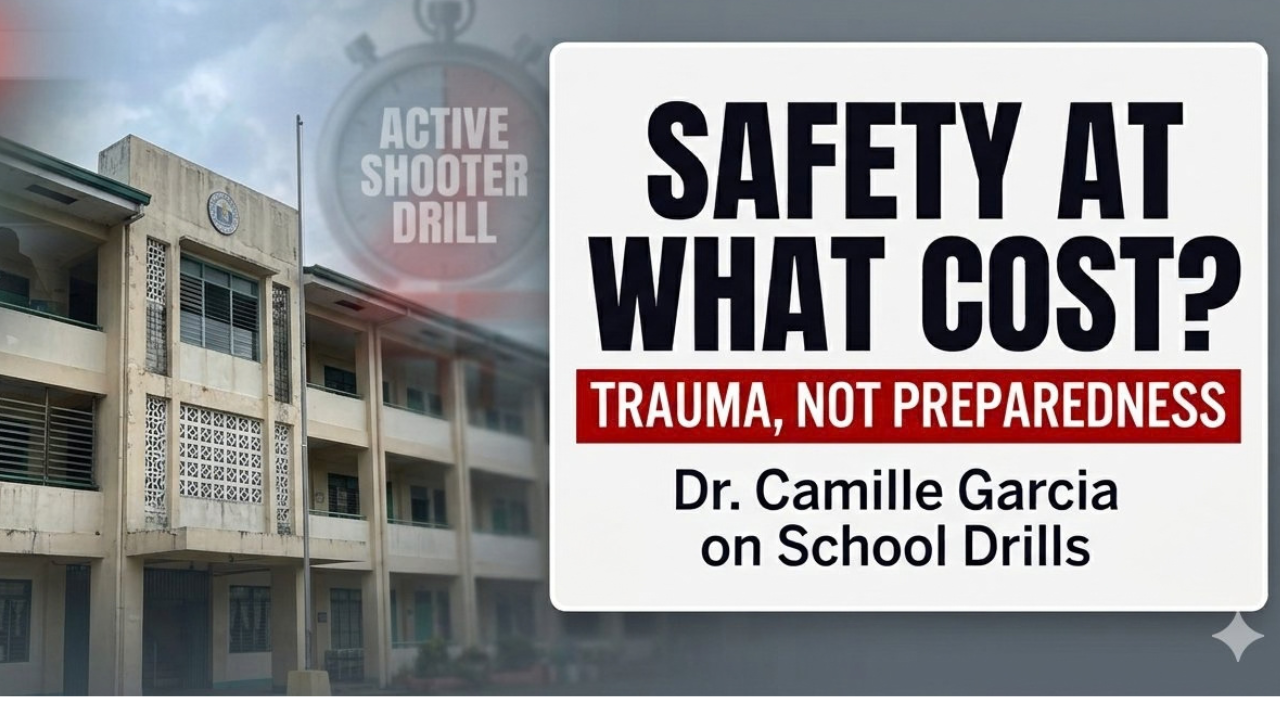
We live in an era where readiness is often confused with theater. In the name of disaster and threat preparedness, our schools have increasingly resorted to high-octane simulations, including nationwide active shooter drills. But as clinical psychologist Dr. Camille Garcia rightly pointed out on WALANG ATRASAN radio program over DWAR-ABANTE RADYO, we must ask ourselves a critical question: At what cost?
Blaring sirens, mock lockdowns, and simulated violence are designed to induce fear to mimic reality. However, for a child already dealing with the lingering psychological effects of pandemic-induced isolation or domestic trauma, these drills do not teach survival—they induce panic. When a school building transforms from a sanctuary of learning into a theater of simulated terror, the psychological anchoring of a child is severely compromised.
Dr. Garcia’s recommendation to shift toward classroom-based tabletop discussions is not just a gentler approach; it is a smarter one. True preparedness comes from cognitive clarity, not adrenaline-fueled panic. Children need to know the steps to safety through calm, repetitive instruction, not through sensory overload that triggers avoidance behavior and nightmares.
However, the debate over safety drills exposes a much larger, uglier truth about our educational system: we are treating the symptoms of school distress while starving the cure.
It is an absolute failure of systemic planning that public schools routinely task one single guidance counselor with the emotional well-being of thousands of students. We want our schools to be safe from external threats, yet we are neglecting the internal psychological crises—depression, anxiety, and self-harm—that destroy young lives quietly every single day.
Furthermore, our communities remain shackled by the cultural stigma that labels mental struggles as mere “delusions” or “craziness.” This judgment forces families into silence, keeping suffering children away from the very help they need.
If the government genuinely cares about school safety, the solution is not budgeting for grand, traumatic simulations. The solution is allocating funds to hire licensed counselors, establishing robust mental health desks in every local barangay, and ensuring that mental health care is treated as a basic human right, not a luxury.
It is time to stop scaring our students into submission and start building the community-based, trauma-informed support systems that will actually save them.
Leave a Reply