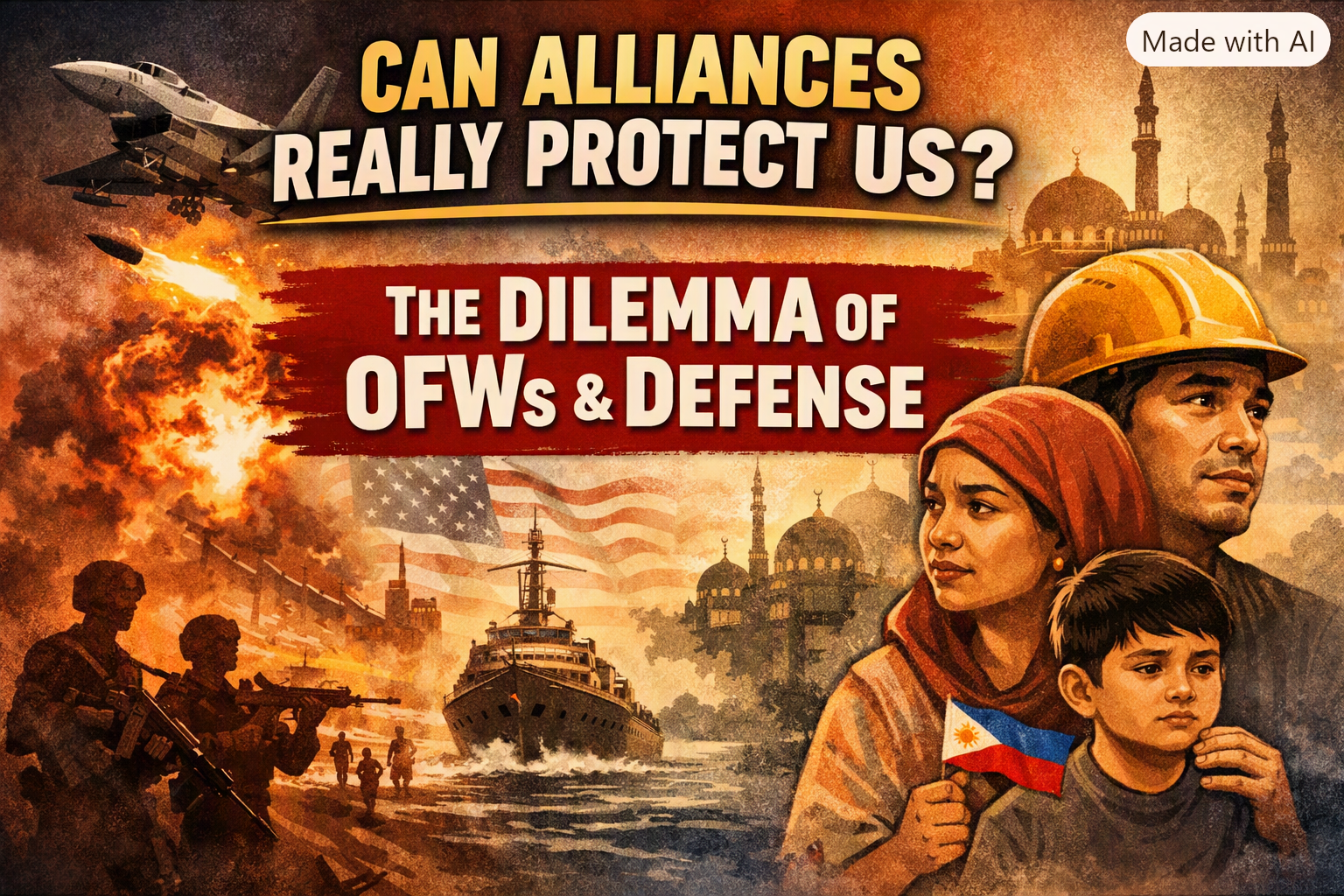
In the Middle East, once again we are reminded that defense agreements—no matter how impressive they look on paper—are not guarantees of real protection.
Take the Mecca Joint Defense Agreement among Saudi Arabia, Turkey, and Pakistan. When Iran launched its attack, no help arrived. Pakistan refused, Turkey offered only words, and the United States—long considered a steadfast ally of Saudi Arabia—did not act immediately.
The lesson here is clear: alliances are not always reliable. In times of crisis, nations prioritize their own interests. A signature on a treaty is not enough; the real question is always, “What’s in it for us?” Without political will, agreements remain empty promises.
Now, let’s bring this closer to home. The Philippines has its Mutual Defense Treaty with the United States, along with agreements for military modernization. But if powerful nations hesitate when danger strikes, how can we be certain that we won’t be left alone when the threat becomes real?
And beyond geopolitics, let us not forget the millions of Overseas Filipino Workers in the Middle East. Every missile strike, every outbreak of conflict in places like Yemen, directly affects them. Security fears, forced evacuations, and threats to their livelihood become nightmares not only for the workers themselves but also for their families here at home. Each crisis translates into lost income, delayed remittances, and deep anxiety about survival.
That is why the lesson is undeniable: overreliance on foreign powers is dangerous. True defense must be rooted in our own strength—through a stronger military, balanced diplomacy, and deeper regional cooperation. Alliances can complement, but they should never replace, our own capabilities.
And in the end, let us remember: the real battle for Filipinos is not about war, but about the “palabigasan”—the daily struggle to put food on the table, and the future of our countrymen who sacrifice abroad for their families here at home.
Leave a Reply