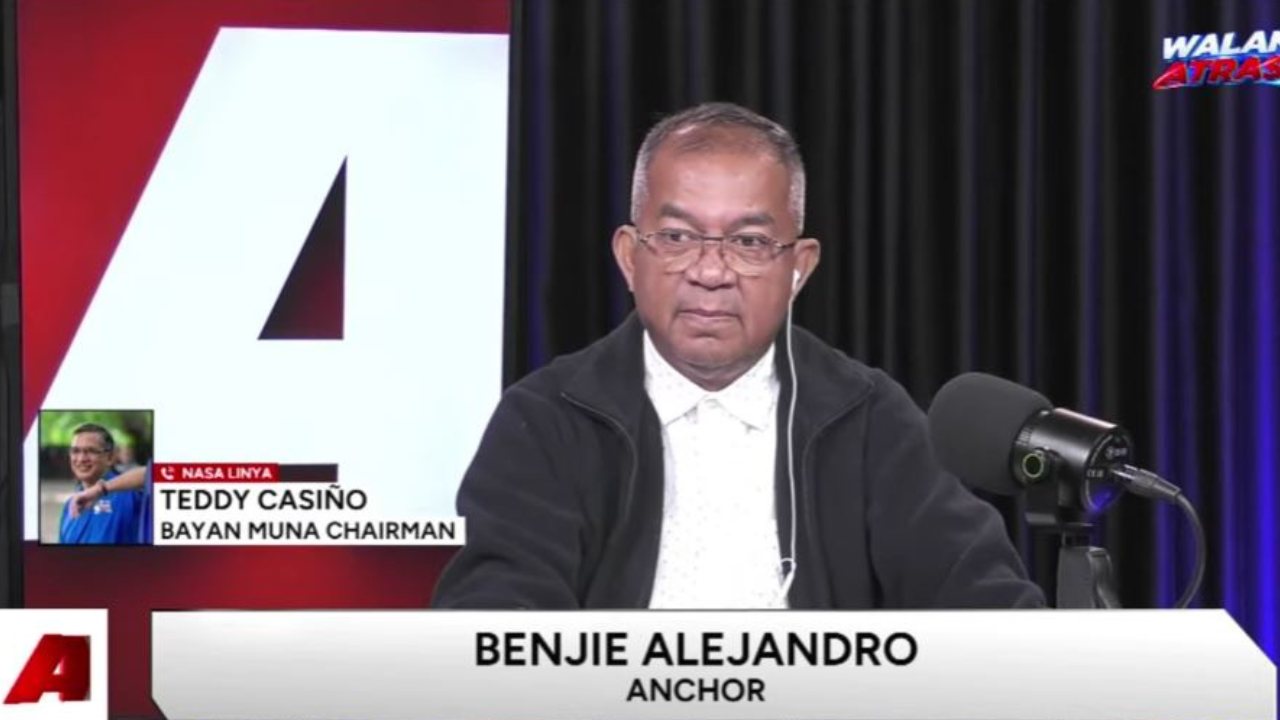
This coming Monday, September 21, marks 54 years since the imposition of Martial Law in the Philippines. For many, it evokes images of history textbooks and black-and-white photographs.
But in my interview over DWAR Abante Radyo, Bagong Alyansang Makabayan (BAYAN) Chairperson Teddy Casiño made one thing clear: The mobilization is not just a backward glance at history—it is a direct confrontation with the economic and environmental crises drowning Filipinos today.
Historically, anniversary protests have served as a shield against the return of authoritarian rule. This year, however, a multi-sectoral coalition of students, laborers, and indigenous groups is pivoting the historical date toward immediate, pocketbook survival.
As the country braces for nationwide demonstrations spanning from Manila’s Liwasang Bonifacio to regional hubs in Cebu, Davao, and Bicol, three burning issues take center stage.
1. The Trillion-Peso Deluge
Filipinos no longer need to see typhoons to experience catastrophic floods; a heavy afternoon downpour now routinely paralyzes Metro Manila. Casiño pointed out the staggering irony of the “Flood Control Scam,” where over P1 trillion in public funds has allegedly evaporated into thin air while infrastructure remains visibly broken.
The public is growing tired of congressional hearings that lead nowhere. The demand this Monday is: the government must deliver transparent investigations that result in actual convictions, not just endless political theater while citizens wade through waist-deep water.
2. Squeezing the Filipino Wallet
The commentary on the streets is heavily dictated by the price of fuel. Inflation is a quiet thief, but government policy acts as its accomplice. High petroleum prices are currently being artificially inflated by a double-layer of state taxes—the Value-Added Tax (VAT) and excise taxes.
When fuel costs rise, the price of rice, vegetables, and daily transport cascades upward. The protesters’ push to temporarily suspend or reduce these petroleum taxes is an entirely pragmatic economic lifeline. If the administration wants to curb rising poverty, giving immediate relief at the gas pump is the logical place to start.
3. The Hidden Cost of Digital Progress
Perhaps the most overlooked warning from Casiño’s interview is the rise of “Pax Silica” projects—massive data centers and mineral processing developments being sold to the public as tech-driven economic progress.
But digital infrastructure demands an immense price. These data centers consume millions of liters of water and vast amounts of electricity, potentially straining local utilities. Furthermore, the mining required for these developments threatens to poison local ecosystems and displace indigenous communities from their ancestral domains. We must ask ourselves: Is tech modernization worth sacrificing our environmental security and marginalized sectors?
A Test of Democratic Space
Organizers have emphasized that the demonstrations will remain strictly peaceful, starting with a mass at San Agustin Church before heading to Mendiola. The ball is now in the court of the Philippine National Police (PNP) and state authorities. In the past, heavy-handed dispersals have only served to escalate tensions. Respecting the constitutional right to peaceful assembly is the minimum requirement for any government that claims to stand for democracy.
Casiño’s statements remind us that democracy does not begin and end at the ballot box. True civic engagement requires active, continuous vigilance. The real challenge for the current administration is to listen to the grievances of the streets with concrete policy changes, rather than viewing public dissent as a threat to public order.

Leave a Reply