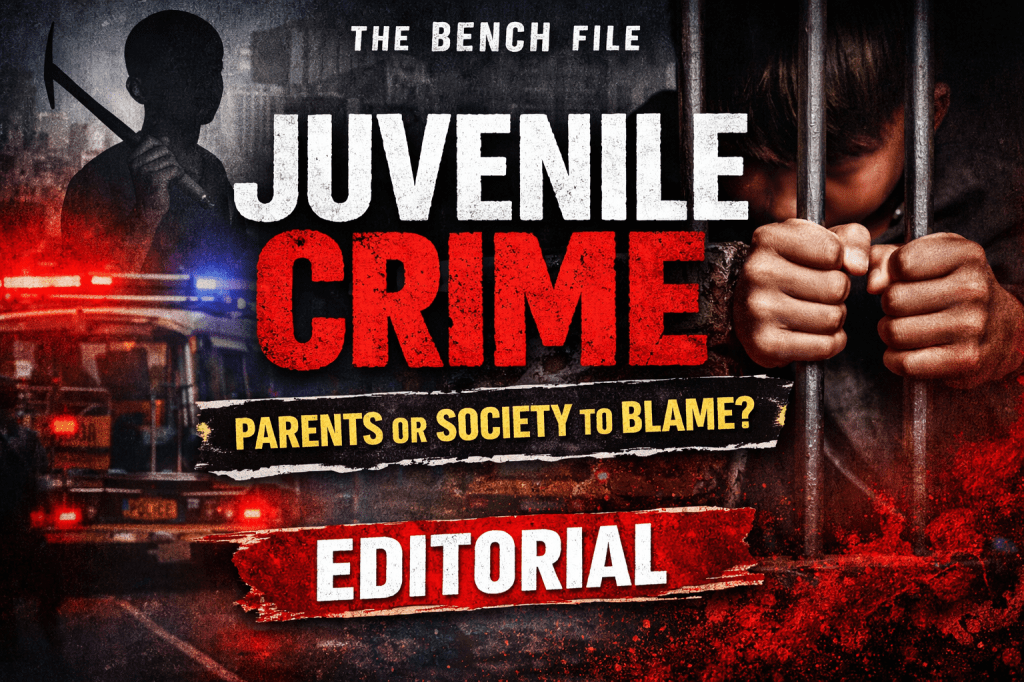
Recently, headlines erupted from Las Piñas: a group of minors caught on camera harassing jeepney passengers, one even wielding an ice pick, according to reports. The incident raises a troubling question—who should be held accountable? The parents, or society at large?
On one hand, the responsibility of parents is undeniable. They are the first teachers of discipline and values. When guidance falters, children easily fall into the wrong crowd. The mother of a 13‑year‑old involved admitted she could no longer control her son—a stark signal of failure within the home.
Yet society cannot escape blame. When communities lack opportunities, safe spaces, and youth programs, the path toward delinquency becomes dangerously accessible. Police reports revealed these minors did not even know where they were headed or what they intended to do—evidence of a broader absence of direction and support.
This is not an isolated case. In Manila, similar reports have surfaced: young people entangled in petty crimes, street disturbances, and violent altercations. Juvenile delinquency is not a local anomaly but a national mirror reflecting poverty and neglect.
It is too simplistic to point fingers solely at parents. Juvenile crime is a sign of the times—parents consumed by livelihood struggles, children left unattended, and a society that fails to provide scaffolding for growth. If both family and community shape the youth, then both must share responsibility.
The real question is not merely “who is at fault,” but “how do we work together?” Parents must offer guidance, while society must extend support. Only then can we reduce the number of young lives drifting into chaos.
True justice is not just punishment—it is the restoration of hope and direction for the youth. For they are, undeniably, the future of the nation.

Leave a comment