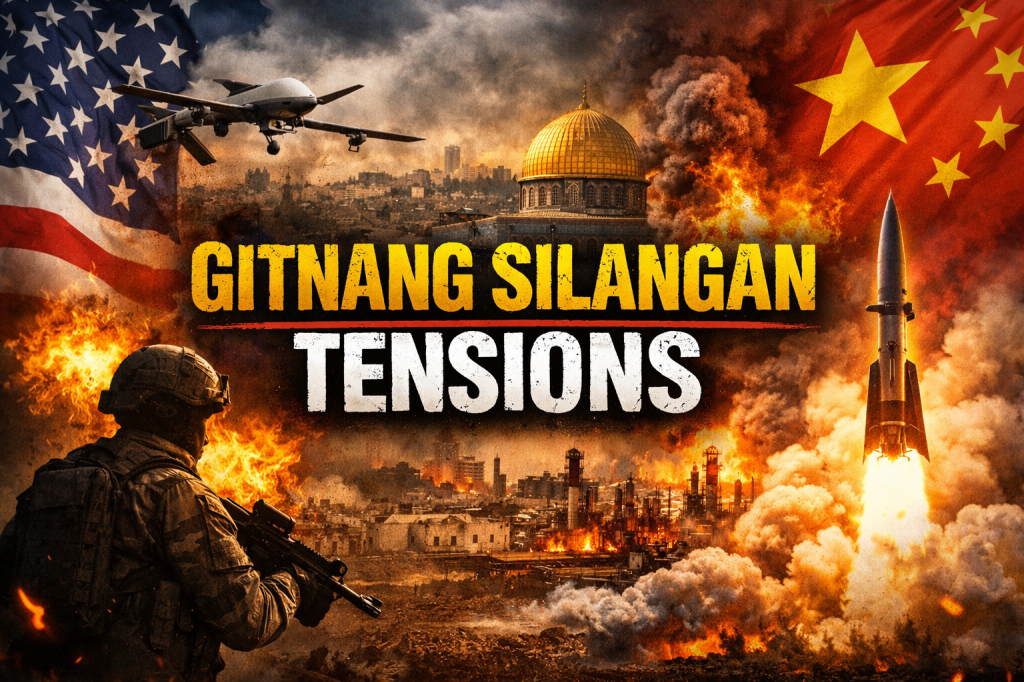
In a recent interview on DWAR-ABANTE RADYO WALANG ATRASAN program, Prof. Eric de Torres, head of the UE Political Science Department, dissected the unfolding developments in the Middle East and their ripple effects across the globe. His insights highlight the dangers of unilateral actions by superpowers and the vulnerabilities of smaller nations like the Philippines.
Prof. de Torres underscored that U.S. President Donald Trump’s decisions—often unpredictable and unilateral—are not merely regional maneuvers but global disruptions. “It’s a unilateral decision on the part of America that did not consider the massive impact on the rest of the world,” he explained, noting how globalization ensures that crises in one region reverberate everywhere.
For the Philippines, these shocks expose systemic weaknesses. From the pandemic that revealed the fragility of the healthcare system to the current oil crisis testing the country’s buffer stocks and deregulation policies, the nation’s preparedness remains in question. De Torres pointed to the urgent need for investment in renewable energy and a sober reassessment of nuclear options, including the Bataan Nuclear Power Plant.
On the principle of “might is right,” de Torres was unequivocal: it is outdated and dangerous. Trump’s behavior, he argued, prioritizes American interests at the expense of allies and global order. Even close partners like the Philippines have felt the sting of tariffs and trade imbalances. “Because they remain powerful, the biggest challenge is how we prepare for any eventuality,” he warned, reminding listeners that Trump’s term still had years to run, with unpredictable consequences.
The professor also emphasized the precarious position of the Philippines in the West Philippine Sea, caught between the geopolitical ambitions of the U.S. and China. America’s military and political interests clash with China’s resource-driven expansion, leaving Manila in a delicate balancing act.
ASEAN, he suggested, should focus on economic cooperation and resource-sharing rather than military alliances, given China’s deep economic ties with neighboring states.
Finally, de Torres reflected on recent military exercises, including Japan’s missile test that sank a decommissioned Philippine Navy vessel. While framed as scheduled drills, the timing underscored the Philippines’ lagging defense capabilities compared to regional powers. “It’s a learning experience,” he said, but one that highlights how far the country must go to strengthen its naval and defense posture.
The interview paints a sobering picture: unilateralism from superpowers destabilizes global order, and smaller nations like the Philippines must urgently prepare, balance, and adapt. As de Torres concluded, the collateral damage of great power politics is borne most heavily by developing countries—reminding us that vigilance and foresight are no longer optional, but essential.

Leave a comment