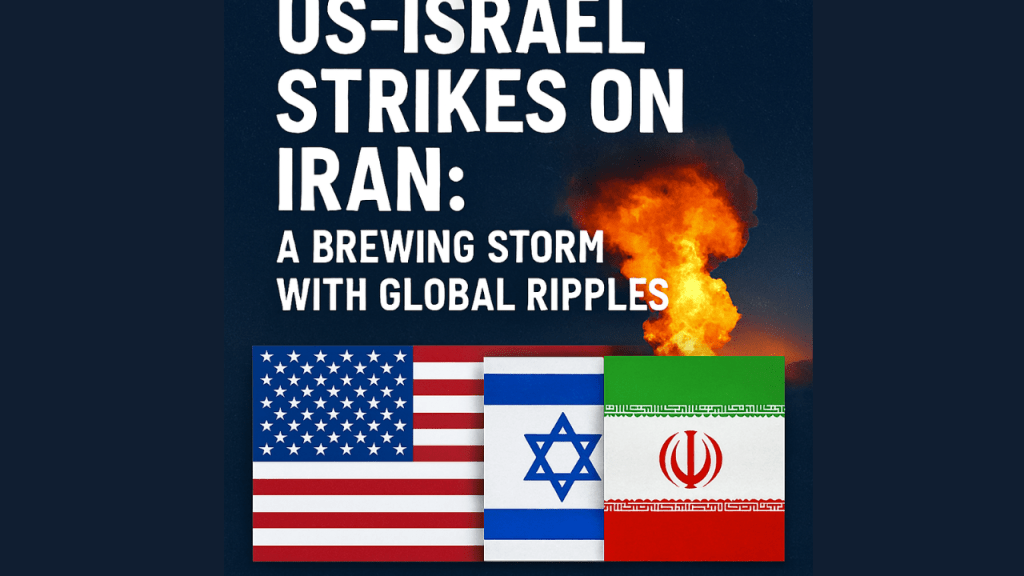
The Middle East is once again at the center of global tension. On my DWAR Abante Radio WALANG ATRASAN program, I interviewed defense analyst Prof. Roland Simbulan, Chair of the Center for People’s Empowerment in Governance (CENPEG). He warned that the latest US–Israeli strikes on Iran could spiral into a wider conflict with far-reaching consequences.
Simbulan explained that the June 2025 attack on Iran’s nuclear research facilities marked the beginning of a dangerous cycle. Despite ongoing negotiations, the US and Israel launched fresh strikes, which he described as an “exercise of brute force.” For him, this underscores Washington’s true objective: regime change in Iran and control of its vast oil reserves.
“Hanggang hindi nila na-accomplish ito, hindi sila titigil,” Simbulan stressed, noting that Iran’s defiance of US–Israeli influence makes it a constant target of military pressure.
Iran’s strategic position in the Middle East—home to the world’s largest oil-producing nations—makes it a critical player. Simbulan warned that neighboring countries hosting US bases, such as Qatar, Kuwait, and the UAE, could become collateral targets of Iranian counterattacks.
This raises alarm for the Philippines, with nearly 1-million OFWs scattered across the region. Flight disruptions, no-fly zones, and potential evacuations could place Filipino workers and travelers in harm’s way.
Simbulan recalled the USS Vincennes incident in 1988, when a US warship mistakenly shot down an Iranian passenger plane, killing all aboard. He cautioned that similar miscalculations remain possible in today’s tense environment, especially with drones and missiles crisscrossing contested airspace.
The conflict is already hitting global markets. Crude oil has surged to $120 per barrel, pushing gasoline prices up by nearly P2 per liter. Simbulan warned of inflationary effects in the Philippines, as rising fuel costs ripple through food and transport prices.
Iran’s role as the center of Shiite Islam adds another volatile layer. The killing of its supreme leader has inflamed Shiite communities worldwide, raising the risk of sympathy attacks against US and Israeli interests.
Meanwhile, Iran’s alliances with Russia, China, and North Korea could escalate the conflict beyond the region. “Kung papanig ang mga big powers na ito, mag-e-escalate ito… even into a world war,” Simbulan cautioned.
Drawing parallels to the Philippines’ hosting of EDCA bases, Simbulan warned that aligning too closely with US military strategy could expose the country to similar risks. He described US leadership under Trump as “unpredictable,” citing his willingness to use military might to pursue resource interests—even against allies.
The Iran–US–Israel conflict is more than a distant war. Its economic shocks, geopolitical risks, and humanitarian fallout could directly affect Filipinos at home and abroad. As Prof. Simbulan emphasized in my DWAR Abante Radio WALANG ATRASAN interview, the Philippines must weigh the costs of hosting foreign military bases and prepare for contingencies that could impact millions of overseas workers.

Leave a comment