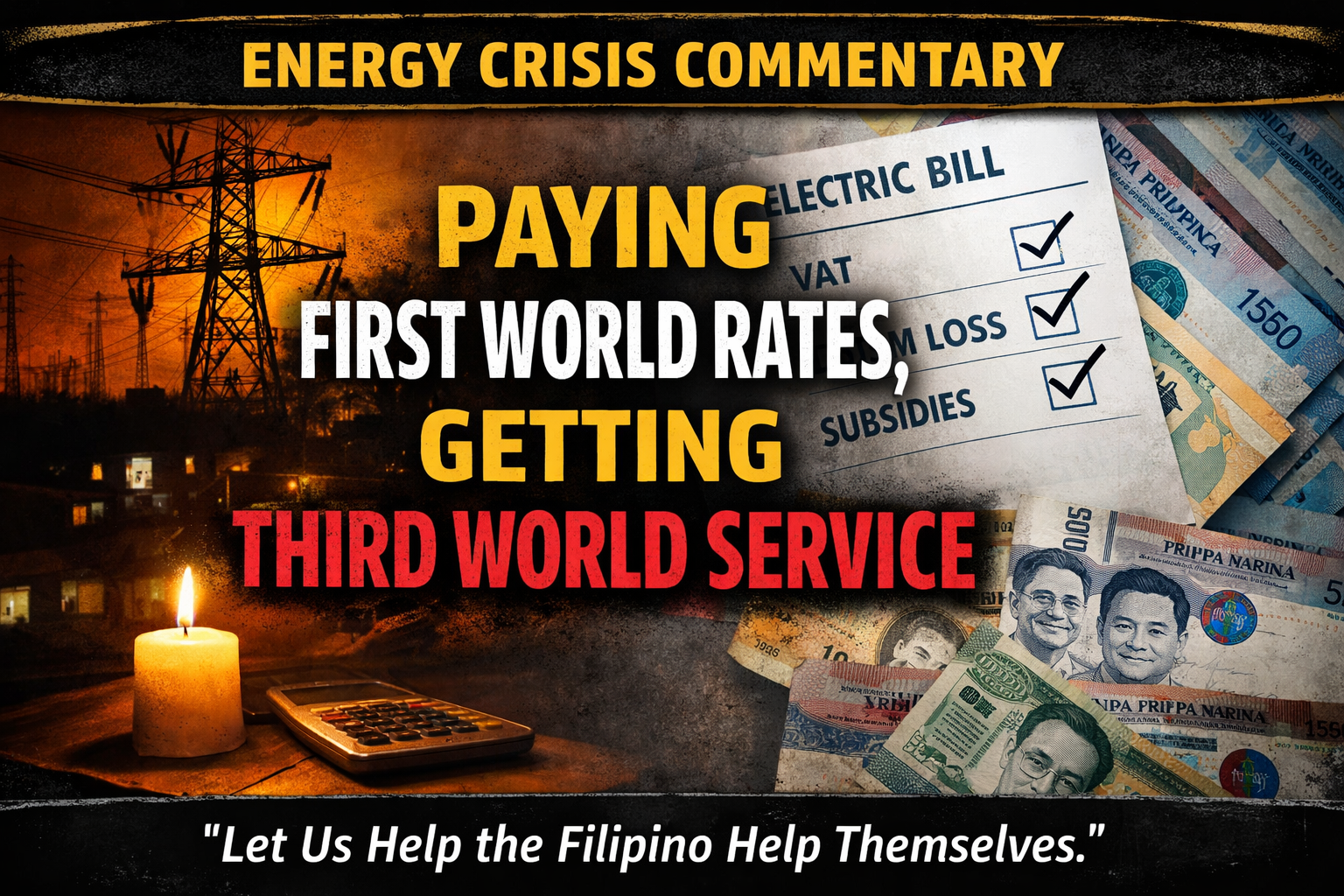
The Philippine energy sector is once again under the spotlight, as brownouts and thin reserves expose the fragility of our power system. In an interview with The Bench Files, Congressman Arthur Yap of the Murang Kuryente Party List laid bare the contradictions haunting our electricity industry: consumers are paying “first world rates” yet enduring “third world service.”
Twenty-five years after the passage of the Electric Power Industry Reform Act (EPIRA), the promises of efficiency and affordability remain unfulfilled. Yap pointed to the latest National Grid Corporation of the Philippines (NGCP) report showing Luzon’s reserve margin at a mere 80 megawatts — a dangerously small buffer that leaves the grid vulnerable to tripping and widespread brownouts.
Aging baseload plants like Sual in Pangasinan and Pagbilao in Quezon, both operating since the 1990s, are prone to breakdowns. Transmission lines remain narrow “highways” that cannot carry sufficient load, while distribution companies and cooperatives have failed to invest in infrastructure. The result: recurring shortages and rotating outages that ordinary Filipinos have endured for decades.
Yap stressed that the real injustice lies in the electric bills. Beyond the cost of generation and distribution, consumers shoulder a host of embedded charges:
– System loss and VAT
– Lifeline subsidies for marginalized households
– Stranded costs from Napocor amounting to billions
– Green energy subsidies
These costs, he argued, should be funded through the national budget rather than passed on to Juan de la Cruz. “We are paying for sins we did not commit,” Yap said, noting that even senior citizen subsidies are tucked into billing instead of being covered by government appropriations.
While acknowledging that no “magical fix” can be expected in 30 days, Yap urged the Department of Energy (DOE), Energy Regulatory Commission (ERC), and stakeholders to convene and craft urgent solutions. His proposal:
– Suspend or remove certain charges from bills, starting with VAT and system loss.
– Fast-track the Kalinga Bill, which would provide direct subsidies to working-class households by embedding discounts in their electricity bills.
This approach, Yap explained, avoids bureaucratic delays since consumers already pay their bills — the subsidy can be passed directly as relief.
For Yap, the energy crisis is not just technical but moral. Ordinary Filipinos are being asked to pay more for less, while policymakers remain locked in blame games. His closing appeal was simple yet powerful: “Let us help the Filipino help themselves.”
As the rainy season approaches, demand may ease temporarily, but without structural reforms, the cycle of shortages and high costs will continue. The challenge now is whether government and industry can finally deliver on EPIRA’s broken promises — or whether consumers will remain trapped in a system that charges like the first world but serves like the third.
Leave a Reply