By Benjie Alejandro
Abante Radyo – Walang Atrasan
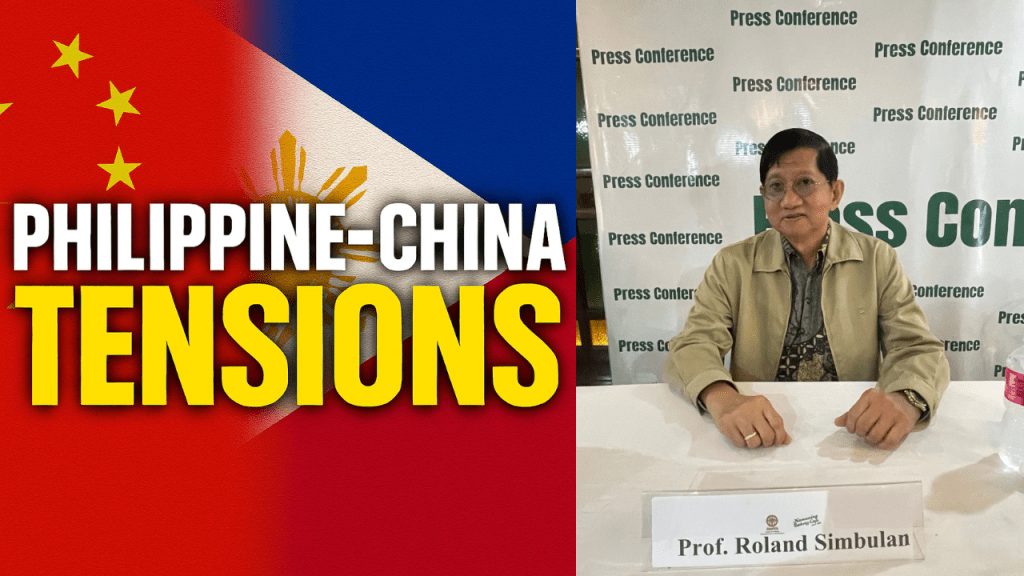
Defense analyst and CENPEG chairperson Professor Roland Simbulan has raised concern over the intensifying rhetoric between China and the Philippines, noting that Beijing’s diplomatic posture has shifted from passive defense to a more assertive, offensive approach.
Speaking on Walang Atrasan, Simbulan pointed to the recent controversy surrounding Chinese Ambassador Jing Quan, who has drawn attention for openly confronting Philippine officials and institutions. “The best defense is to be on the offensive,” Simbulan explained, highlighting China’s growing use of mainstream and social media to amplify its narratives and challenge critics of its actions in the West Philippine Sea.
Political Realignment and 2028 Elections
Simbulan observed that China’s strategy is not confined to maritime disputes but extends into Philippine politics. He noted that some political factions perceived as pro-China, including allies of former President Rodrigo Duterte and Vice President Sara Duterte, are realigning in anticipation of the 2028 elections. The Senate, with its role in shaping foreign policy, is seen as a critical arena.
“Now pa lang, makikita mo na yung alignment,” Simbulan said, referring to senators who signed resolutions criticizing China’s actions. He cautioned that Beijing is closely monitoring which Filipino politicians can be considered reliable allies.
Strategic Geography, Not Just Resources
Unlike Venezuela or Greenland, where oil and rare earths drive foreign interest, Simbulan stressed that the Philippines’ value lies in its geography. Positioned at the frontline of the South China Sea, the country hosts U.S. military assets under the Enhanced Defense Cooperation Agreement (EDCA). This positioning, he noted, allows the U.S. to use Philippine territory as a strategic point for regional operations—a reality that could expose the nation to retaliation from America’s adversaries.
“In case of conflict, we are not the target country,” Simbulan explained. “But we become sitting ducks because our territory is used as a launching pad.”
Freedom of Navigation and Global Stakes
The dispute is not only between China and the U.S. European powers, including Germany and France, also assert freedom of navigation in the South China Sea to protect their trade routes. China’s sweeping claims—covering nearly 80 percent of the waters—threaten fishing industries in ASEAN nations and restrict commercial movement.
Simbulan emphasized that Filipino fishermen, simply trying to earn a living, are being harassed by Chinese Coast Guard vessels in their own waters. He cautioned against framing the Philippines’ defense of its sovereignty as merely siding with Washington: “We’re just being pro-Filipino, not pro-China, not pro-US.”
What’s at Stake
Looking ahead, Simbulan warned that the 2028 elections will be heavily influenced by international interests. Both the U.S. and China are expected to exert pressure to ensure a Philippine government favorable to their strategic goals.
“With global powers eyeing the Philippines’ strategic location and political landscape, so much is at stake,” he concluded. “Our sovereignty must not be compromised. The path forward lies in asserting a foreign policy rooted in Philippine sovereignty and national interest—neither beholden to China nor the United States, but firmly Filipino first.”
 The Bench Files
Leave a comment