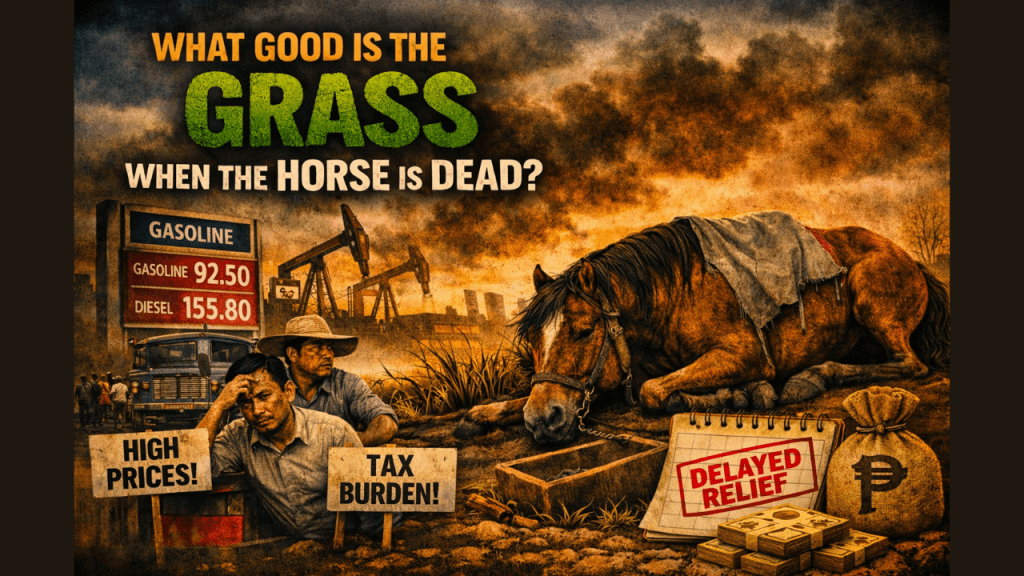
An old Filipino proverb hits painfully close to home: “What good is the grass when the horse is dead?” “Aanhin pa ang damo, kung patay na ang kabayo?” It perfectly captures the nation’s frustration after Senator Panfilo Lacson’s statement that the reduction or removal of excise taxes on fuel won’t happen anytime soon.
While gasoline and diesel prices continue to soar, jeepney drivers, farmers, and ordinary citizens are sinking deeper into hardship. Relief remains a distant promise. By the time the government acts, the “horse” — the people’s economy — may already be lifeless.
It’s the same old tune: quick to impose taxes, slow to deliver relief. When it’s about collection, the system moves fast. When it’s about compassion, everything is “under study,” “not yet,” or “wait and see.” But this isn’t an abstract policy debate — it’s hunger at the dinner table, fares that can’t be paid, and prices that eat away at every peso earned.
If there is genuine concern for the people, the question should not be when but why not now? Because in the end, promises of reform mean nothing if the nation’s “horse” has already collapsed from exhaustion. Grass is useless when the horse is dead — and reforms delayed are justice denied.
 The Bench Files
Leave a comment