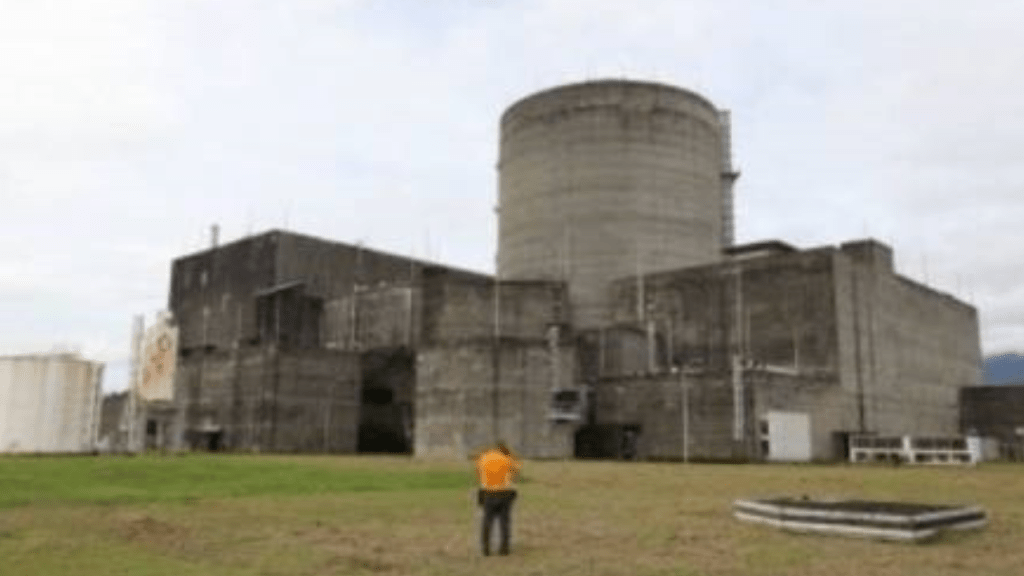
In a candid interview on Walang Atrasan over DWAR Abante Radyo, Congressman Mark Cojuangco, Chairman of the Special Committee on Nuclear Energy, once again made a strong case for nuclear power as the Philippines faces mounting energy challenges. With oil prices surging due to instability in the Middle East, Cojuangco emphasized that the country’s long-delayed nuclear program could have shielded Filipinos from dependence on imported fossil fuels.

“Ang pinakamabilis na pagpasok po natin sa nukleyar ay paandarin natin ang 100 percent na kumpleto at napakagandang pagkagawa na Bataan Nuclear Power Plant number 1,” Cojuangco stressed, noting that the BNPP remains a viable national asset valued at over $2 billion.
Cojuangco explained that the BNPP, with its 620-megawatt capacity, could be operational within four years—much faster than building a new plant, which would take six to seven years. He added that the existing facility could serve as equity to secure financing worth up to $14 billion for additional nuclear projects.
The congressman pointed out that countries like South Korea, Brazil, and Slovenia operate plants similar to the BNPP, while the United States continues to run reactors older than Bataan’s. He questioned why the Philippines hesitates to utilize its own nuclear asset despite international precedents.
“Kung ang okay yun sa mga Amerikano, ano ba po ang ating problema dito po sa pagpaandar ng ating napakagandang (BNPP) pagkagawa?” he asked, citing the revival of the Three Mile Island plant in the U.S. with Microsoft committing to buy its power for 20 years.
According to Cojuangco, the Philippines must double or triple its power generation capacity by 2040, requiring an additional 22,000 megawatts. Nuclear energy, he argued, should form a significant part of this mix, with a minimum of 16,000 megawatts from nuclear plants by 2045.
He also highlighted the economic advantage: while coal or LNG imports cost around $400 million annually per 1,000 megawatts, nuclear fuel would only cost $20 million—a massive savings that could reduce the country’s dependence on foreign energy sources.
Cojuangco noted that Republic Act 12305, which created Philatom as the independent nuclear regulator, has already been signed into law. However, delays in appointing its leadership threaten to stall progress. He urged the Department of Energy and the Department of Science and Technology to advise the President to act swiftly.
As the Philippines grapples with unreliable renewable energy delivery and volatile global fuel markets, Cojuangco’s message was clear: nuclear energy offers a path to stability, affordability, and independence.
“Yung nuklear ay magbibigay po sa atin ng independence,” he concluded, underscoring that nuclear power is not just an option but a necessity for the nation’s future.
 The Bench Files
Leave a comment