Benjie Alejandro
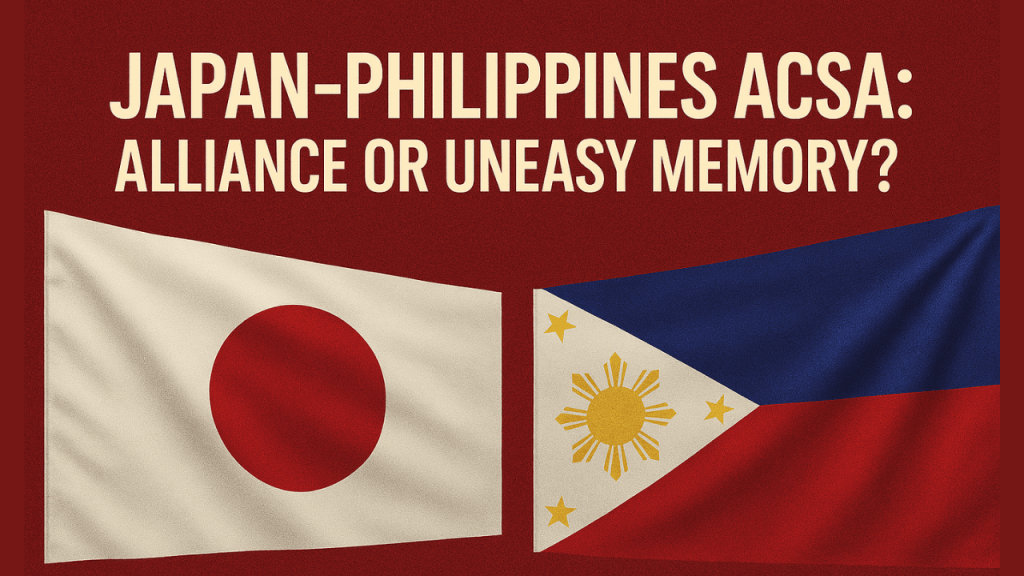
In recent weeks, headlines have focused on the visit of Japan’s Foreign Minister to Manila, culminating in the signing of the Acquisition and Cross‑Servicing Agreement (ACSA between the Philippines and Japan.
On paper, the agreement promises deeper cooperation in logistics, training, and disaster response. Yet behind the signatures and smiles lies a heavier question: Are we ready to once again accept the presence of Japanese troops on Philippine soil?
Japan today is undergoing a dramatic shift in its defense posture. By 2027, Tokyo aims to double its defense spending, transform its Self‑Defense Forces into a full-fledged military, and strengthen ties with the United States and NATO. For some observers, these moves signal the return of militarist ambitions—ambitions that once inflicted immense suffering on our nation.
For the Philippines, this is not merely a matter of geopolitics. The wounds of World War II remain unhealed. The memory of the Manila Massacre, widespread sexual violence, and the systematic abuse of “Filipino comfort women” continues to weigh heavily. Many victims passed away without justice or compensation. Thus, the possibility of Japanese troop redeployment—even under the banner of alliance—raises deep concerns about sovereignty and dignity.
At the same time, Manila and Tokyo are expanding cooperation beyond defense. Japan is pushing for stronger judicial collaboration, from cybercrime prevention to transnational law enforcement. While modernization of our justice system is welcome, some worry about the growing influence of Japan in sensitive areas of governance.
This is where the principle of multi‑alignment, articulated by Professor Clarita Carlos, becomes crucial. The idea is straightforward yet strategic: do not bind ourselves to one camp. Engage with different nations depending on the issue and interest.
This is not opportunism—it is pragmatism. Multi‑alignment strengthens the Philippines’ position, protects national interest, and reduces the risk of being caught in the crossfire of great power rivalries.
None of this means closing the door on Japan. In economics, technology, and disaster response, their role is vital. But our government must remain critical and cautious. Any agreement allowing foreign troop presence must undergo thorough debate, rest on clear legal foundations, and above all, respect the memory of war victims.
The ACSA and related accords are not just about logistics or judicial ties. They are reminders that history cannot be forgotten. The Philippines’ choices must be anchored on sovereignty, justice, and peace. New alliances should serve as bridges toward a safer region—not reopen wounds that have yet to heal.
#FilipinoComfortWomen#ManilaMassacre#Atrocities
 The Bench Files
Leave a comment