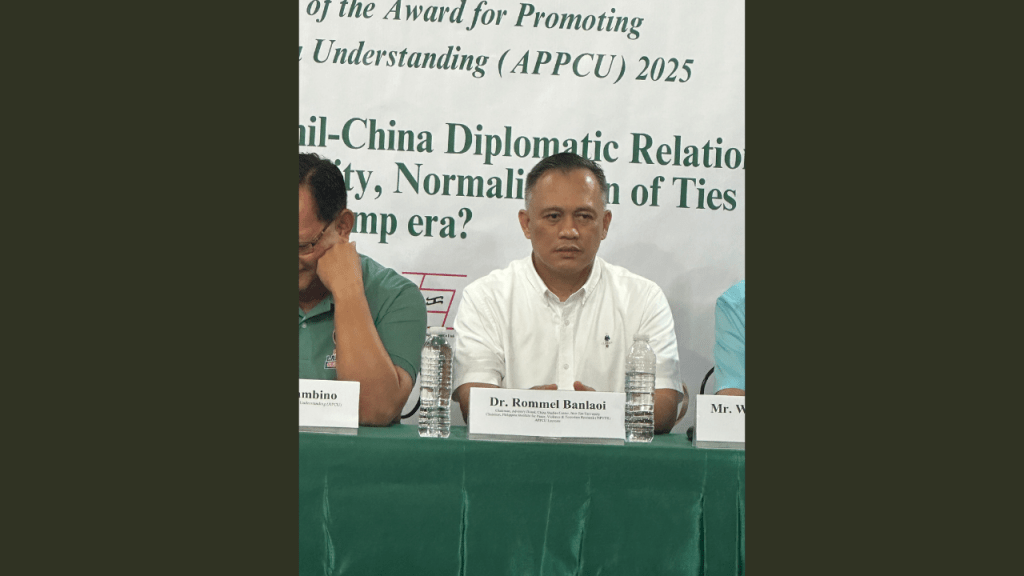
On December 29, I interviewed security expert Prof. Rommel Banlaoi on my radio program WALANG ATRASAN over DWAR‑Abante Radyo to discuss two pressing issues: the lingering shadow of terrorism in the Philippines and the evolving dynamics of Philippine–China relations in the West Philippine Sea.
Terrorism and the Bondi Beach Connection
Prof. Banlaoi clarified recent reports linking suspects in the Bondi Beach terror attack in Australia to the Philippines. While allegations of formal training in Mindanao were unfounded, he confirmed that the suspects did spend time in Davao City. Their 27‑day stay, he noted, was “too long for a vacation, too short for training,” prompting questions about possible deeper connections.
Banlaoi emphasized that the Philippines has historically been an epicenter of extremist activity, citing figures from Al‑Qaeda and the Islamic State who once operated in the country. He warned that the suspects’ visit to Islamic charitable institutions in Mindanao may symbolize ties to broader terrorist networks.
Since the passage of the Anti‑Terrorism Law of 2020, the Philippines’ ranking in the Global Terrorism Index has significantly improved — dropping from the top 10 most impacted countries to 20th place. Yet Banlaoi cautioned that the Bondi incident has once again placed the Philippines on the global radar.
Cooperation vs. Confrontation in the West Philippine Sea
The conversation shifted to maritime tensions. Banlaoi acknowledged the trust deficit between Manila and Beijing, especially after the Philippine Coast Guard accused China of using humanitarian rescue efforts as propaganda. Yet he stressed that cooperation, rather than confrontation, offers more tangible benefits.
“China’s visibility in the South China Sea is high,” he said, pointing out that Chinese vessels remain present even during storms, while Philippine monitoring lags. For Banlaoi, this incident should serve as a signal to revive bilateral cooperation in areas such as search and rescue operations, joint fishery management, environmental protection, and combating transnational crimes.
He stressed that decades of confrontation have yielded little: “In 30 years of challenging China, what have we gained? Did Scarborough Shoal return to us?”
A Call for Innovation
Banlaoi closed with a broader reflection: the Philippines must innovate in both counter‑terrorism and maritime strategy. Outdated mindsets, he warned, hinder progress. “We did not innovate. We need to innovate,” he said, announcing plans to relaunch the Philippine Institute for Peace, Violence and Terrorism Research in 2026, to mark the 25th anniversary of 9/11.
Editorial Note
This interview underscores two realities: terrorism remains an unfinished challenge, while maritime disputes demand innovative approaches. For Banlaoi, vigilance and innovation are the keys — whether in preventing extremist threats or navigating the turbulent waters of the West Philippine Sea.
 The Bench Files
Leave a comment