House Assistant Majority Leader and Lanao del Sur 1st District Rep. Zia Alonto Adiong commended President Ferdinand “Bongbong” Marcos Jr. for his determination in ensuring that the first-ever elections in the Bangsamoro Autonomous Region in Muslim Mindanao (BARMM) will push through next year.
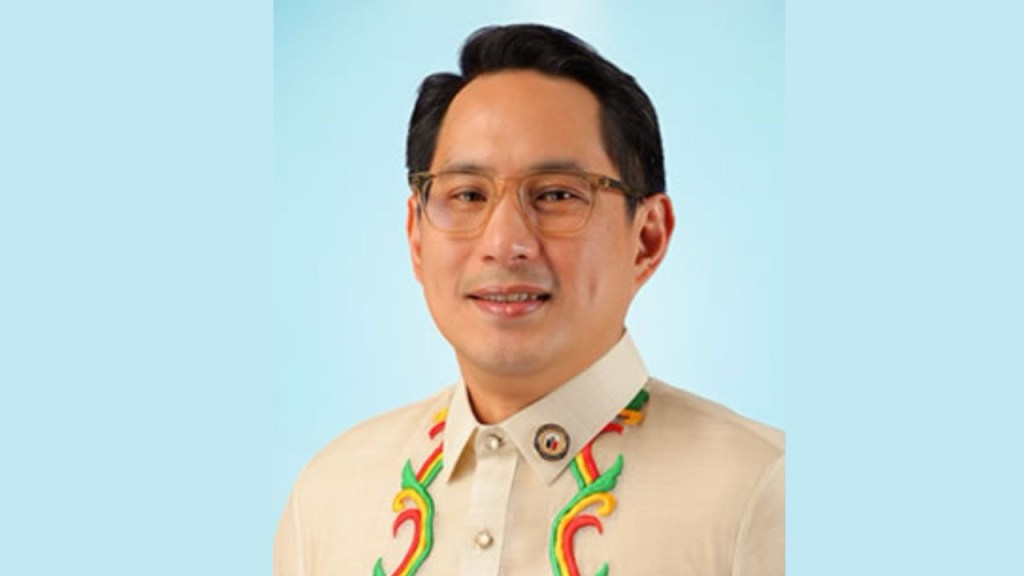
“I fully support the President’s call to proceed [with the BARMM] elections in 2025,” Adiong said during the regular press conference at the House of Representatives.
Adiong was responding to a recent statement by President Marcos, wherein he issued a warning to those who might seek to obstruct the BARMM polls scheduled for next year.
The Chief Executive warned that any attempt to undermine the electoral process will face the full force of the government.
Adiong expressed excitement about witnessing the matured political process in the BARMM and the opportunity for its residents to choose their leaders freely.
He emphasized the unique political structure of the BARMM, which features a parliamentary setup, and expressed optimism about the region’s progress under the Marcos leadership.
“This is going to be the first election of the BARMM, simultaneous with the national and local governments in 2025, and we are very excited as a resident of
BARMM,” Adiong said.
He added, “We are very excited to see finally that the people in the BARRM would really have the way now to choose their leaders and to see how under President Bongbong Marcos, the BARMM would progress as a unique political structure because we have parliamentary setup.”
Adiong highlighted the significance of the transition period for the BARMM, originally slated for three years under the Bangsamoro Organic Law but extended for another three years.
He emphasized that the BARMM aims to transition from the previous structure of the Autonomous Region in Muslim Mindanao to a parliamentary system, with a focus on embracing the principles of self-rule and self-determination.
“The essence of governance in the BARMM is to embrace the principle of self-rule and self-determination, and that is what we are seeing now,” Adiong pointed out.
“Now, the immediate effect of the transition period… is to allow the people to assume their God-given right and the right under the Constitution to freely choose their leaders,” he added.
In the same press conference, Lanao del Norte 1st District Rep. Mohamad Khalid Dimaporo shed light on the broader implications of the upcoming BARMM elections, particularly for those outside the BARMM region.
Dimaporo, chair of the House Committee on Muslim Affairs, emphasized the significance of the BARMM elections as the culmination of the peace agreement, encompassing both political and normalization tracks.
He cited the need for synchronization between these tracks, expressing concern over delays in the normalization process, specifically in converting fighters of the Moro Islamic Liberation Front (MILF) into peaceful members of society.
“While the political track has been progressing, the normalization track has been slower,” Dimaporo stated. “Congress has a crucial role in ensuring that the needs of the Bangsamoro people are addressed, not only legislatively but also in terms of fulfilling the promises made in the peace agreement.”
Dimaporo stressed the importance of unity within Congress under the leadership of Speaker Ferdinand Martin G. Romualdez to collaborate effectively with leaders within the Bangsamoro.
He underscored the need to fulfill commitments made to the MILF leadership, including livelihood opportunities, housing, and education for their children.
“We must work hand in hand to deliver on the promises made to the MILF Command,” Dimaporo emphasized. “Congress, under the leadership of Speaker Romualdez, stands ready to ensure that the aspirations of the Bangsamoro people are met, even beyond the upcoming elections.”
Meanwhile, in a press statement, Adiong said the establishment of the BARMM “symbolizes a profound reckoning with history, a long-overdue redress for the Bangsamoro people.”
He continued, “At its core lies the restoration of agency to the very individuals whose rights have been trampled upon for far too long. This restoration finds its zenith in the sacrosanct exercise of democratic choice—free and fair elections—an integral facet of our governance structure.”
He emphasized that the upcoming BARMM, governed by its unique parliamentary system, signifies a departure from the norms of national governance, ushering in a new era of autonomy and self-determination.
“We await with bated breath the unfolding of this historic chapter, brimming with anticipation for the dawn of a transformed Bangsamoro,” he said.
 The Bench Files
Leave a comment